Nearby Attractions
Discover Avignon’s Highlights
Perfectly positioned in the heart of Avignon, our locations offer an ideal starting point for discovering the city’s rich heritage and Provençal atmosphere. Wander through historic streets, admire remarkable architecture, explore lively squares and local markets, or enjoy the cafés, restaurants and boutiques scattered throughout the centre.
From Avignon’s most iconic landmarks to quieter corners full of character, many of the city’s highlights can be easily reached on foot, allowing you to experience Avignon at your own pace.
From Avignon’s most iconic landmarks to quieter corners full of character, many of the city’s highlights can be easily reached on foot, allowing you to experience Avignon at your own pace.
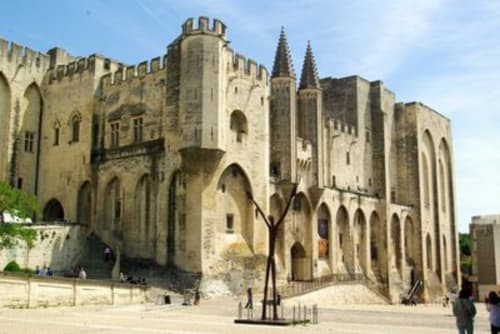
The Palace of the Popes
The Palais des Papes is one of Avignon’s most famous landmarks and a must-see in the city center. This impressive Gothic palace was once the residence of the popes during the 14th century.
Its large size and location near the Rocher des Doms make it visible from many parts of the city and beyond.
Visitors can explore the palace with a standard ticket, but we recommend the combined ticket with the Pont d’Avignon for just a few euros more.
Its large size and location near the Rocher des Doms make it visible from many parts of the city and beyond.
Visitors can explore the palace with a standard ticket, but we recommend the combined ticket with the Pont d’Avignon for just a few euros more.
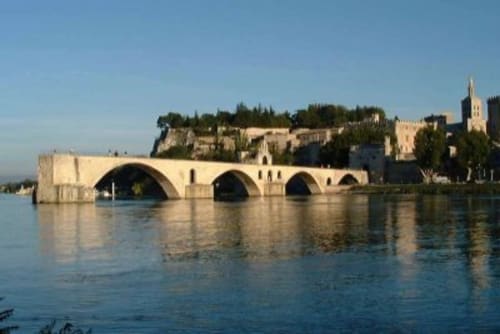
The Avignon Bridge
The Pont Saint-Bénézet, also known as the Pont d’Avignon, is one of the city’s most famous landmarks. Built in the 12th century, it originally had 22 arches crossing the Rhône.
Today, only four arches remain. The bridge once played an important role in controlling access to the city and collecting tolls between the Papal States and the Kingdom of France.
After being repeatedly damaged by floods and wars, the bridge was eventually abandoned.
You can visit the bridge with a standard ticket or choose the combined ticket with the Palais des Papes.
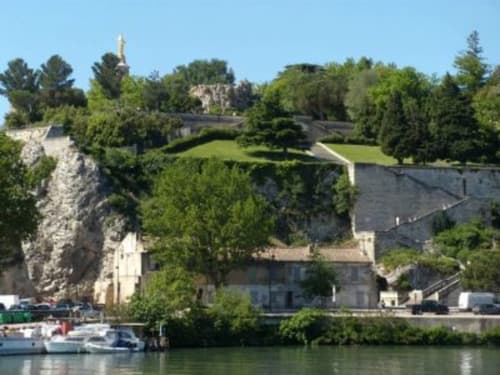
The Rocher des Doms
The Rocher des Doms is a hill located between the Palais des Papes, which is built against it, and the Pont d'Avignon at its foot.
It served as protection for the foundation and subsequent development of the city. Its summit is covered by a public garden called "Jardin des Doms".
Access is free. If you buy the combined Palace/Bridge tickets , stop by the top to have a meal by the small pond or enjoy the panoramic view.
It served as protection for the foundation and subsequent development of the city. Its summit is covered by a public garden called "Jardin des Doms".
Access is free. If you buy the combined Palace/Bridge tickets , stop by the top to have a meal by the small pond or enjoy the panoramic view.
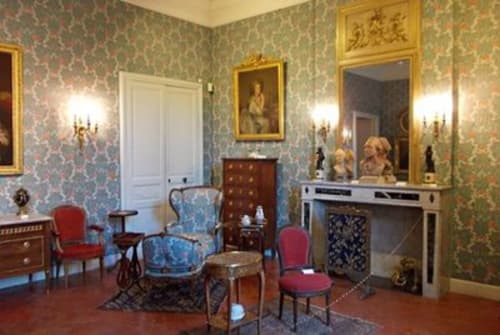
Museums
The five municipal museums of Avignon — the Calvet Museum, the Lapidary Museum, the Petit Palais Museum, the Requien Museum, and the Palais du Roure — offer a wide variety of collections, ranging from fine arts and archaeology to natural history and Provençal heritage. Admission is free for everyone.
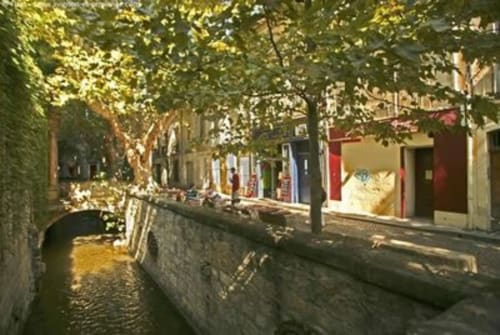
Dyers' Street
Overlooking the Sorgue River, whose waters are channeled by the Vaucluse Canal towards the ramparts it passes through at the Saint-Esprit or Sorguette Tower, this street was, from the 14th to the 19th centuries, the site of intense manufacturing activity. Twenty-three waterwheels provided power to mills and silk spinning mills. Its waters were used by dyers to rinse fabrics. Even though only four wheels remain today, it is still nicknamed "Rue des Roues" (Street of Wheels) by the people of Avignon. Paved with cobblestones and shaded by plane trees, it has become one of the tourist attractions of the city of the Popes during the Avignon Festival.