Activities in Vaucluse
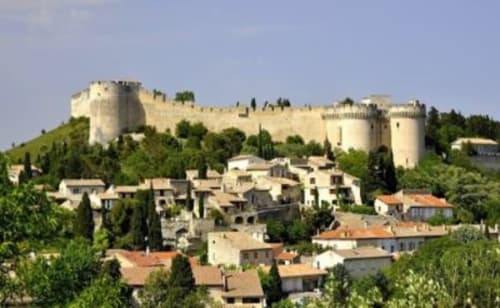
Villeneuve-lez-Avignon and Fort Saint André
Just across the Rhône from Avignon, Villeneuve-lès-Avignon is about a 20-minute walk away. In season, you can also cross by barge.
One of its main landmarks is Fort Saint-André, built between the 13th and 14th centuries. It once served as a military fortress, court, and prison, and you can still see graffiti left by former prisoners.
Visits cost around €6 per person.
One of its main landmarks is Fort Saint-André, built between the 13th and 14th centuries. It once served as a military fortress, court, and prison, and you can still see graffiti left by former prisoners.
Visits cost around €6 per person.
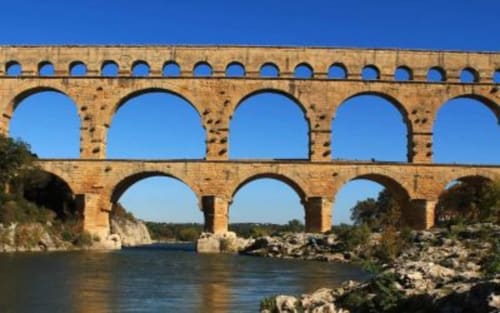
The Pont du Gard
The Pont du Gard is a three-tiered bridge built to carry a Roman aqueduct . Located in Vers-Pont-du-Gard, near Nîmes, it spans the Gardon River. Likely constructed in the first half of the 1st century, it ensured the continuity of the Roman aqueduct that carried water from Uzès to Nîmes. According to recent research, it ceased to be used at the beginning of the 6th century.
It is classified as a historical monument and has been inscribed on the UNESCO World Heritage List.
You can book your tickets here .
It is classified as a historical monument and has been inscribed on the UNESCO World Heritage List.
You can book your tickets here .
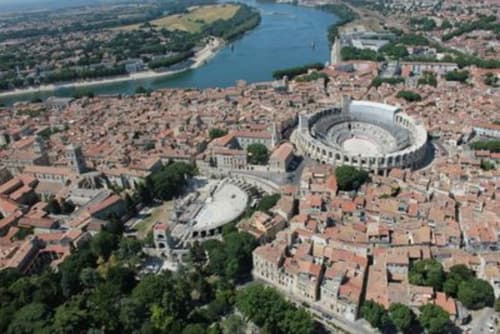
Arles
Arles is a city located on the Rhône River in the Bouches-du-Rhône department. It is renowned for having inspired the paintings of Van Gogh, who influenced the contemporary art exhibited at the Vincent Van Gogh Foundation. Once the provincial capital of ancient Rome, Arles is also famous for its numerous ruins dating from that era, notably the Arles Amphitheatre, which now hosts plays, concerts, and bullfights.
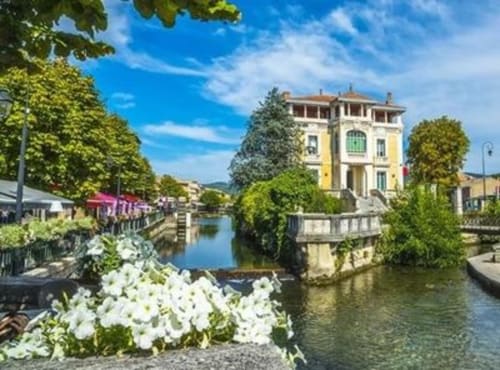
Isle sur la Sorgue
L'Isle-sur-la-Sorgue is located between Avignon and the northern Luberon valley. It takes its name from the Sorgue River, which rises a few kilometers upstream in Fontaine-de-Vaucluse. The river divides into numerous branches and canals, creating several islands within the town. For this reason, the town is sometimes nicknamed the "Venice of the Comtat Venaissin" (a reference to the Comtat Venaissin, of which it was once a part). During the 1960s, the town specialized in antiques and secondhand goods. The "Venice of Provence" has since become the third largest European center for this trade, after London and Saint-Ouen.
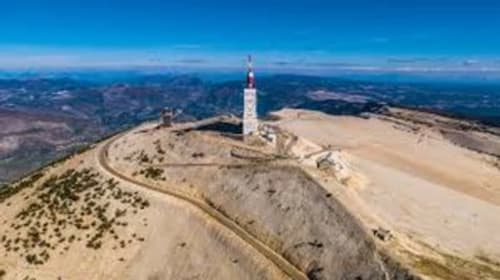
Mount Ventoux
Mont Ventoux, known as the Giant of Provence, is the highest peak in Vaucluse at 1,910 metres.
Visible from many parts of the region, it is one of Provence’s most iconic landmarks. The summit can be reached by car from Malaucène, Bédoin, or Sault.
Cyclists can also take on the famous climb, regularly featured in the Tour de France. The route from Bédoin is particularly challenging.
Bike rentals and transport can also be organised on request.